|
 |
The Weather of June 2026 – A June with outbreaks of heavy rain
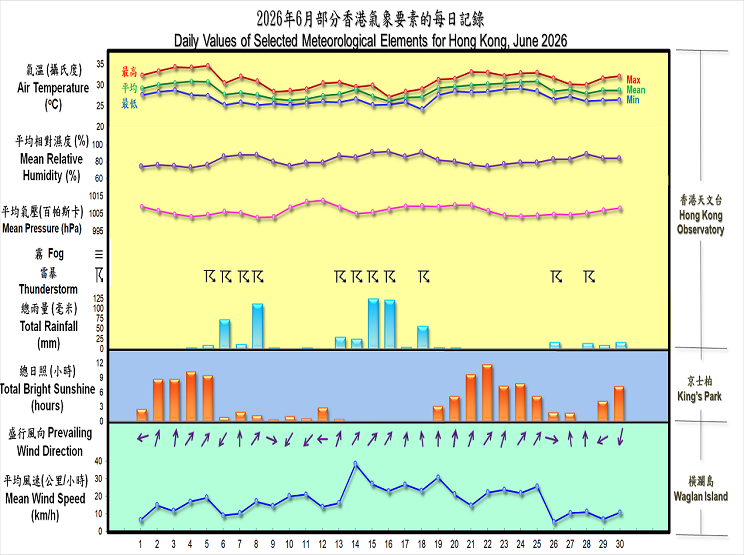
Mainly attributed to an active southwest monsoon and troughs of low pressure, there were outbreaks of heavy showers which necessitated the issuance of three Black Rainstorm Warning Signals in the month. The monthly rainfall of June 2026 was 600.5 millimetres, about 22 percent above the normal of 491.5 millimetres. The month was slightly hotter than usual. The monthly mean temperature of 28.6 degrees was 0.3 degrees above the normal of 28.3 degrees.
|
 |
 |
Global Seasonal Climate Update for August-September-October 2026
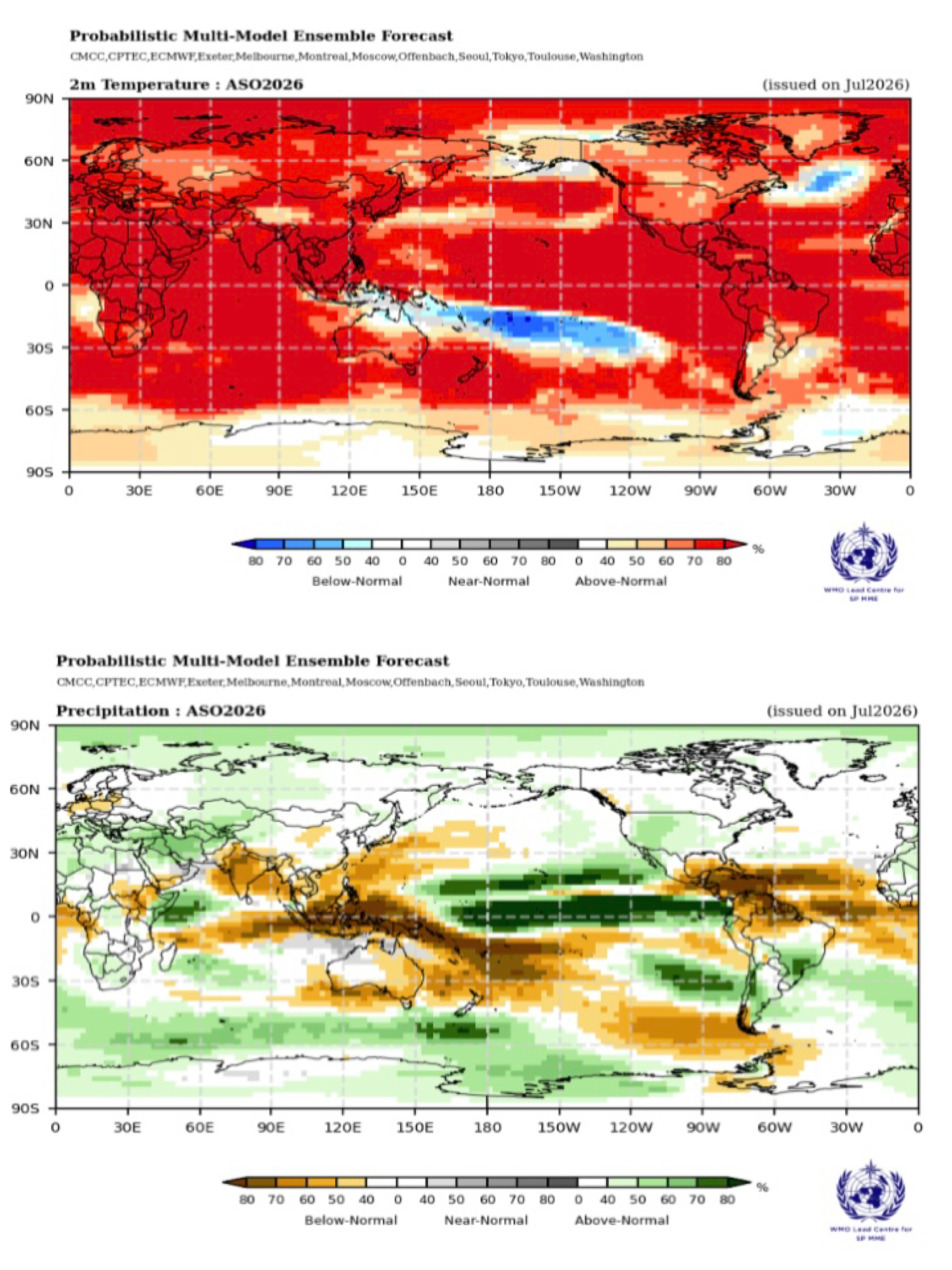
For the August–October 2026 (ASO 2026) season, the multi-model ensemble (MME) indicates a rapid development toward strong El Niño conditions. The seasonal average sea surface temperature (SST) anomaly is forecast to reach approximately 2.9°C, with the intensification trajectory peaking in November. For the ASO 2026 season, MME forecasts project a nearly universal global dominance for enhancement in probabilities for above-normal temperatures over landmasses and above-normal rainfall stretching across the central and eastern equatorial Pacific east of the Date Line, exhibiting a classic, strong atmospheric response to Pacific El Niño.
|
|
 |
Fires, floods and record heat: This is the summer of compounding disasters
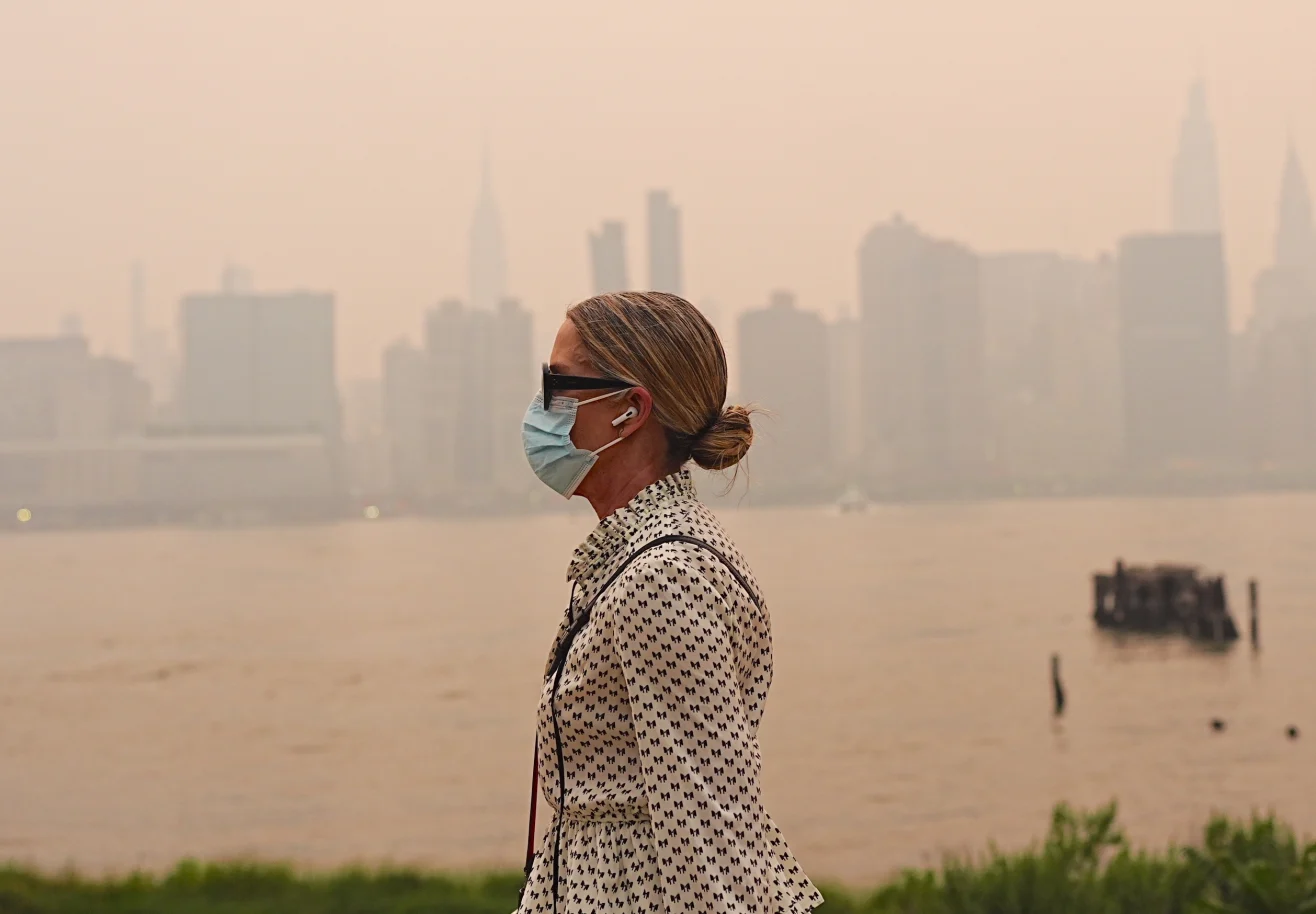
This summer proves we don’t have to wait until the future for climate change to smack us in the face. From torrid heat waves, to deadly flash floods, to raging wildfires and their associated acrid smoke — the signs are all around us, right now. The disasters of late are what global warming looks like: One piled on top of another, all occurring at about the same time. Scientists long ago sounded the alarm that when climate disasters come, they won’t necessarily happen one at a time. Instead, there would be an uptick in compound disasters, as one extreme piles upon another. And that is exactly what has happened this summer.
|
|
 |
Ocean warming, marine heatwaves and sea-level rise pose increasing risk in South-West Pacific region
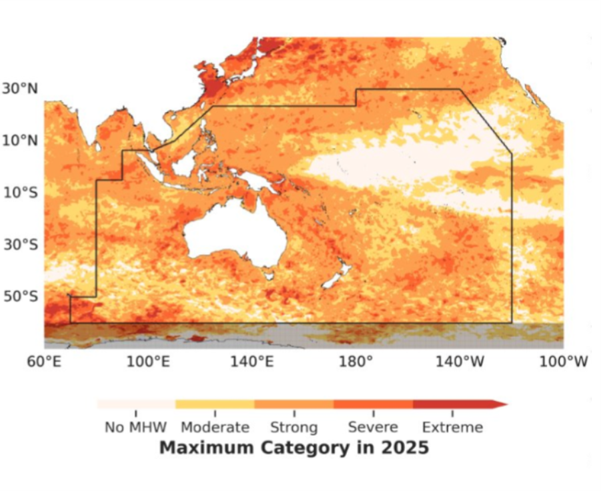
The vast ocean expanse in the South-West Pacific is becoming hotter and more acidic, harming local economies, such as fisheries, and marine ecosystems, whilst rising sea levels threaten vulnerable coastal communities and low-lying island nations, according to a new report from the WMO. In 2025, the remaining tropical ice cover in Papua, Indonesia, was estimated to be only about 2% of the ice area observed in 1988. The last remaining tropical glacier of the region is expected to disappear by the end of 2026 or early 2027, according to the report.
|
|
 |
Balancing marine species conservation with cost-effective renewable energy development
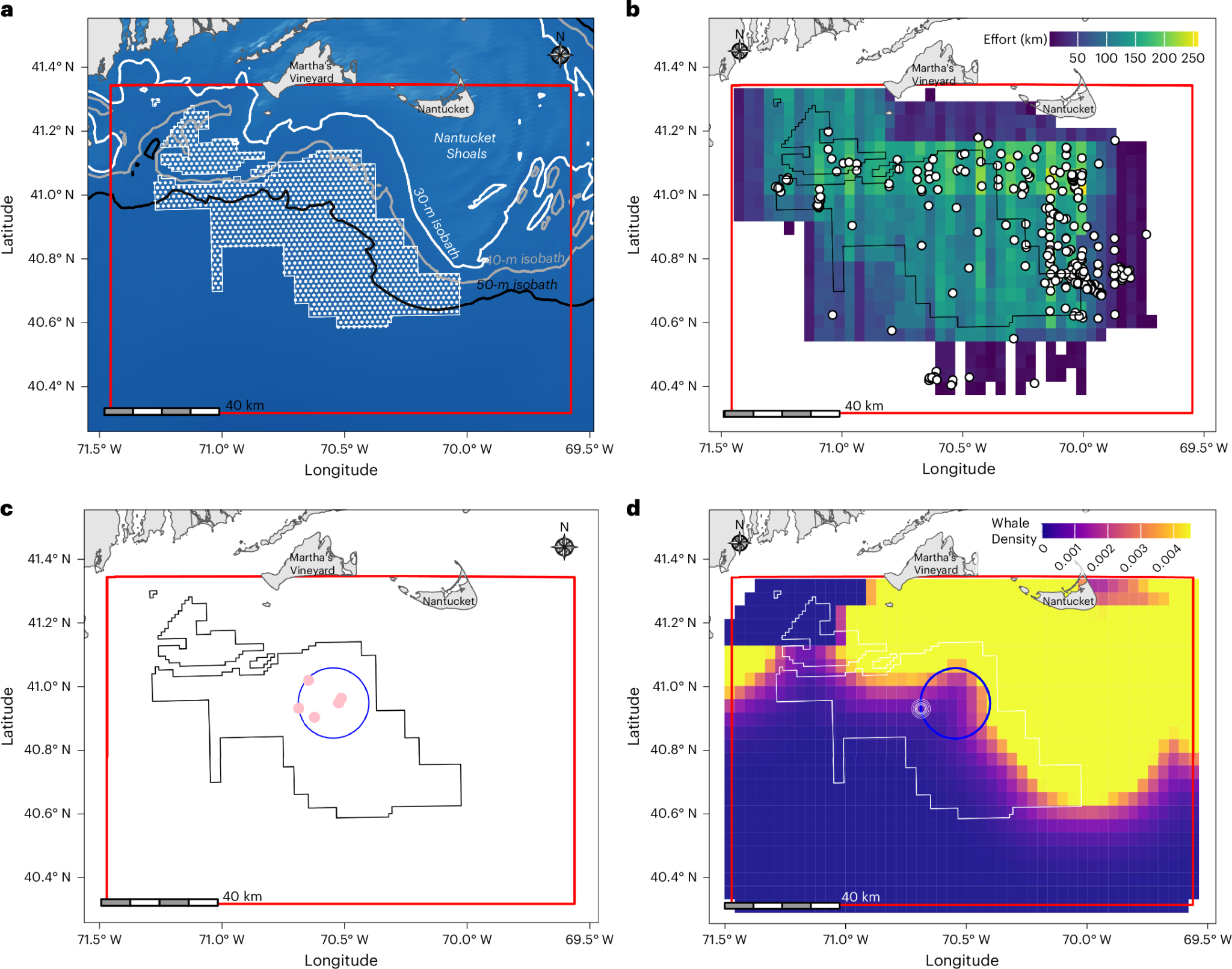
Climate change is necessitating renewable energy development while contributing to shifting wildlife phenology and distribution. A team develops a framework to identify trade-offs between financial costs to developers and conservation, considering the critically endangered North Atlantic right whale (Eubalaena glacialis) and offshore wind energy development. By coupling an offshore wind energy construction simulation with a density surface model to quantify the number of right whales exposed to pile-driving noise under ten mitigation scenarios, the team highlights mitigation measures that can yield conservation value with minimal financial burden.
|
|
 |
Operational Verification of Artificial Intelligence Weather Prediction
The workshop on Verification of AI-models in Operational Centers gathered more than 200 international scientists to address emerging challenges in the operational verification of AI-models, to promote best practices for fair comparison with traditional NWP systems, and to pave the way for the exploration of novel metrics and meaningful diagnostics for AI weather prediction assessment. The event also established a baseline for verification activities within the WMO’s Weather Prediction Model Intercomparison Project, with the ultimate goal of shaping operational verification standards.
|
|
 |
讓探空氣球飛向預報最需要的地方 —— “數值預報+北斗探空”目標觀測首次應用於颱風防禦
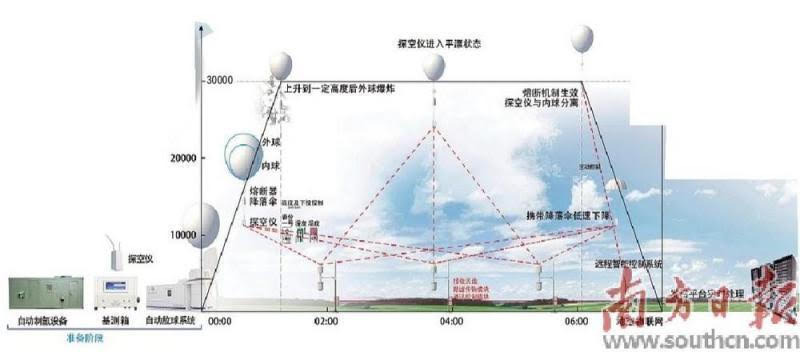
“數值預報+北斗探空”目標觀測指導流程首次應用於颱風“巴威”業務實戰。這些雙層嵌套式探空氣球抵達預定高度後,不用傳統“持續上升、高空爆破”的單一模式,而是隨高空氣流平漂,定向移動,精準抵達目標區域。當達到設定條件,熔斷裝置啟動,外層氣球爆破,內層氣球攜帶探測設備轉入下降階段,繼續採集氣壓、溫度、濕度、風向和風速等資料。一次施放,即獲得上升、平漂、下降三段觀測數據。從過去固定地點、固定時次的常規探測,向預報需求牽引下的目標觀測邁進。
|
|
 |
New article published: Replacement of Mercury-in-Glass Thermometers at Hong Kong Observatory Headquarters
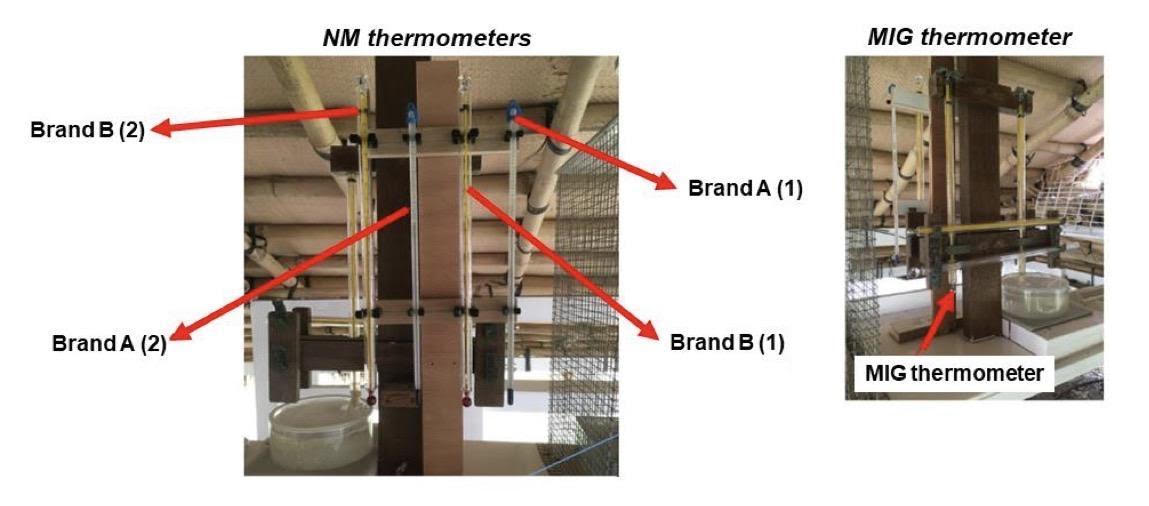
At the HKO Headquarters, the official hourly air temperatures have been observed since 1884 from the mercury-in-glass (MIG) thermometer. Recently, the MIG thermometers have been replaced by non-mercury (NM) liquid filling thermometers following recommendation from the WMO. After the replacement, operation safety had been greatly enhanced. Even if the NM thermometer was accidentally broken, no mercury would be spilled out, eliminating negative impacts on human health and the environment.
|
|
 |
WMO 2027 Calendar Competition
WMO has announced the launch of its 2027 Calendar Photography Competition. This year’s theme, “Your Weather, Your World,” celebrates the extraordinary ways weather, climate and water shape our daily lives and the world around us. The winning photographs will be featured in the printed WMO 2027 Calendar. They will appear on the WMO website, social media platforms, public outreach materials, in World Meteorological Day 2027 celebrations, and will also be promoted among other U.N. agencies. The deadline for entry is 16 August 2026.
|
|
 |
Membership renewal is now more convenient
Payment through Faster Payment System (FPS) is now available (Our FPS ID: 166920512). Support your society, don’t forget to renew your membership!
|
|
通訊錄的文章只以文章原本的語言表達。
The news in the Newsletter will be presented in the originating language only. |